5 differences between tennis and padel
How is tennis different from padel?
5 Differences Between Tennis and Padel
At a time when interest in both Tennis and Padel is growing exponentially — and when people place increasing importance on physical activity — it is essential to clarify the range of characteristics that motivate different types of athletes.
These racket sports may appear similar at first glance, but they differ significantly across several aspects: court structure, equipment, game rules, strategy, and overall match dynamics.
In this article, we explore these differences in detail to better understand what truly separates one sport from the other.
Tennis Court Structure
A tennis court is rectangular and relatively large, measuring approximately 23 metres long and 8 metres wide for singles matches, and 11 metres wide for doubles.
The court is divided in half by a net that is 1.07 metres high at the posts and 0.91 metres at the centre.
The baseline and sidelines define the court boundaries, and there are specific areas for serving known as service boxes.
Padel Court Structure
A padel court is significantly smaller, with dimensions of about 20 metres long and 10 metres wide.
It is also rectangular and divided by a net, which stands 0.88 metres high at the centre and 0.92 metres at the sides.
A unique feature of padel courts is the presence of glass and metal walls surrounding the court — and these walls are part of the game. Players can use them to bounce the ball, creating a playing environment dramatically different from tennis.
Tennis Equipment
Tennis rackets are made from materials such as graphite, carbon fibre, or kevlar.
They have a larger head in order to provide a wider hitting surface.
Tennis balls are rubber-based and covered with felt, measuring roughly 6 cm in diameter and weighing between 56 and 59 grams.
Padel Equipment
Padel rackets are smaller, solid, and stringless, featuring a perforated face.
They are typically made from materials like fibreglass or carbon fibre.
Their compact structure makes them easier to manoeuvre in tight spaces.
Padel balls look similar to tennis balls but have slightly lower pressure, which affects their speed and bounce during play.
Rules of Tennis
Tennis can be played individually (singles) or in pairs (doubles).
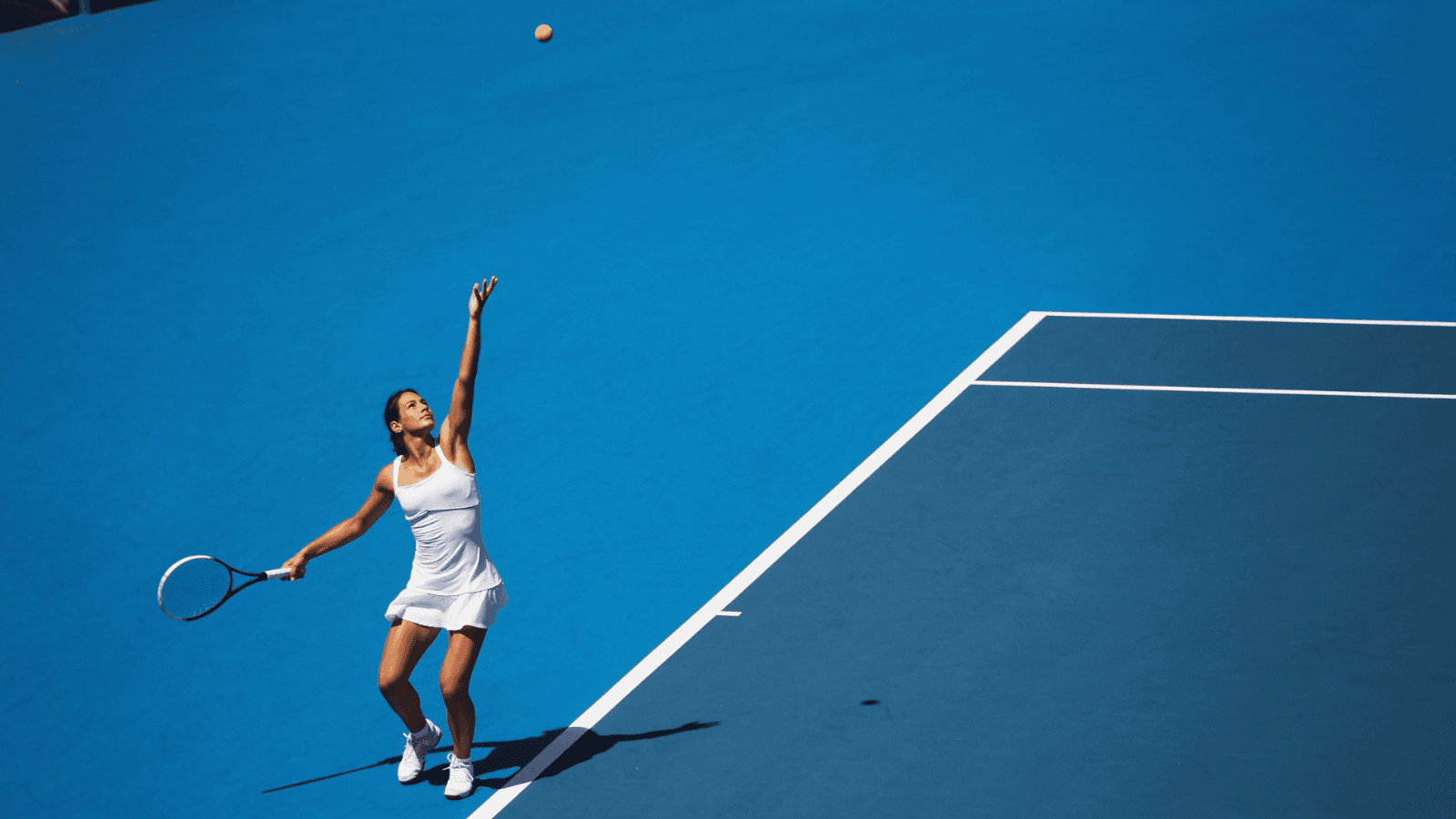
The game begins with an overhead serve behind the baseline, and the ball must land in the opposite service box.
A point is won when the opponent fails to return the ball within the court boundaries, hits it out, or doesn’t clear the net.
Sets are played to six games, requiring at least a two-game advantage to win the set.
Tennis uses the scoring sequence: 15, 30, 40, game.
Rules of Padel
Padel is typically played in pairs.
The serve must be performed underhand, bouncing the ball first on the ground before it lands in the opposite service box.
As in tennis, points are won when the opponent cannot return the ball within the court boundaries.
However, the defining twist in padel is that the ball may hit the walls after bouncing on the ground — adding a strategic dimension unseen in tennis.
Padel follows the same scoring pattern as tennis: 15, 30, 40, game.
Sets are also played to six games, with a two-game advantage required.
Strategy & Game Dynamics in Tennis
Tennis strategy relies heavily on power and shot placement.
Players combine strong serves, volleys, and baseline strokes to dominate opponents.
The large court allows for wide angles and variations in depth, resulting in a dynamic and physically demanding game.
Strategy & Game Dynamics in Padel
Padel strategy focuses more on positioning, anticipation, and intelligent use of the walls to create awkward angles.
Due to the smaller court and enclosed space, points are faster and require sharp reflexes.
Communication between partners is essential, as coordination and court coverage are key to success.
Popularity & Growth of Tennis
Tennis is one of the most globally recognised sports, with a long history and a strong presence at major international events such as the Olympics, US Open, Wimbledon, Roland-Garros, and the Australian Open.
It is played at both amateur and professional levels and benefits from a well-established global infrastructure.
Popularity & Growth of Padel
Padel has experienced exponential growth in recent years.
Although it is relatively new compared to tennis, it is rapidly gaining popularity thanks to its social nature and accessibility.
Many tennis clubs are adding padel courts to their facilities, and the number of padel tournaments and competitions continues to rise.
Although tennis and padel share some similarities, their differences in court structure, equipment, rules, and strategy create unique and distinct playing experiences.
Tennis, with its emphasis on strength and precision, offers a physically and technically demanding challenge.
Padel, with its smaller court and use of walls, provides a fast, strategic, team-oriented style of play that encourages communication and coordination.
Both sports continue to grow worldwide, attracting players from all backgrounds and enriching the global racket-sport community.
Despite tennis’ long-standing legacy, padel is expanding at an astonishing pace, with a rapidly increasing number of players and enthusiasts.
Beyond the evident rule differences, both sports share one remarkable trait: a global appeal and the ability to bring together talent from all corners of the world.
At Tiesports, we celebrate both. We unite the best of both worlds.