7 mistakes to avoid when managing a club in 2025

If you run a sports club and want to make sure it's ready to grow by 2025, this article is for you
7 Mistakes in Club Management (and How to Avoid Them in 2025)
Running a padel, tennis or pickleball club in 2025 is more demanding than ever.
The number of players is growing, competition between clubs is rising and customer expectations are higher than at any point in the past.
Even so, many clubs remain stuck in outdated routines — often due to lack of time, lack of knowledge or simply habit.
The result? Loss of efficiency, player frustration and managers constantly putting out fires.
In this article, we break down the 7 most common mistakes that continue to slow down club growth — and what to do to overcome them.
So if you manage a sports club and want to make sure you're ready to grow in 2025, this guide is for you.
1. Managing a club through WhatsApp, Excel and phone calls
It may feel convenient, but long-term it’s a bottomless pit.
Confusing message threads, lost reservations, forgotten payments… and exhausted managers.
This approach not only consumes time — it increases the risk of human error.
Every poorly recorded booking is an unhappy customer.
Every failed communication is a lost opportunity.
How to avoid it: adopt a digital solution that centralizes bookings, training schedules, communication and payments in one place.
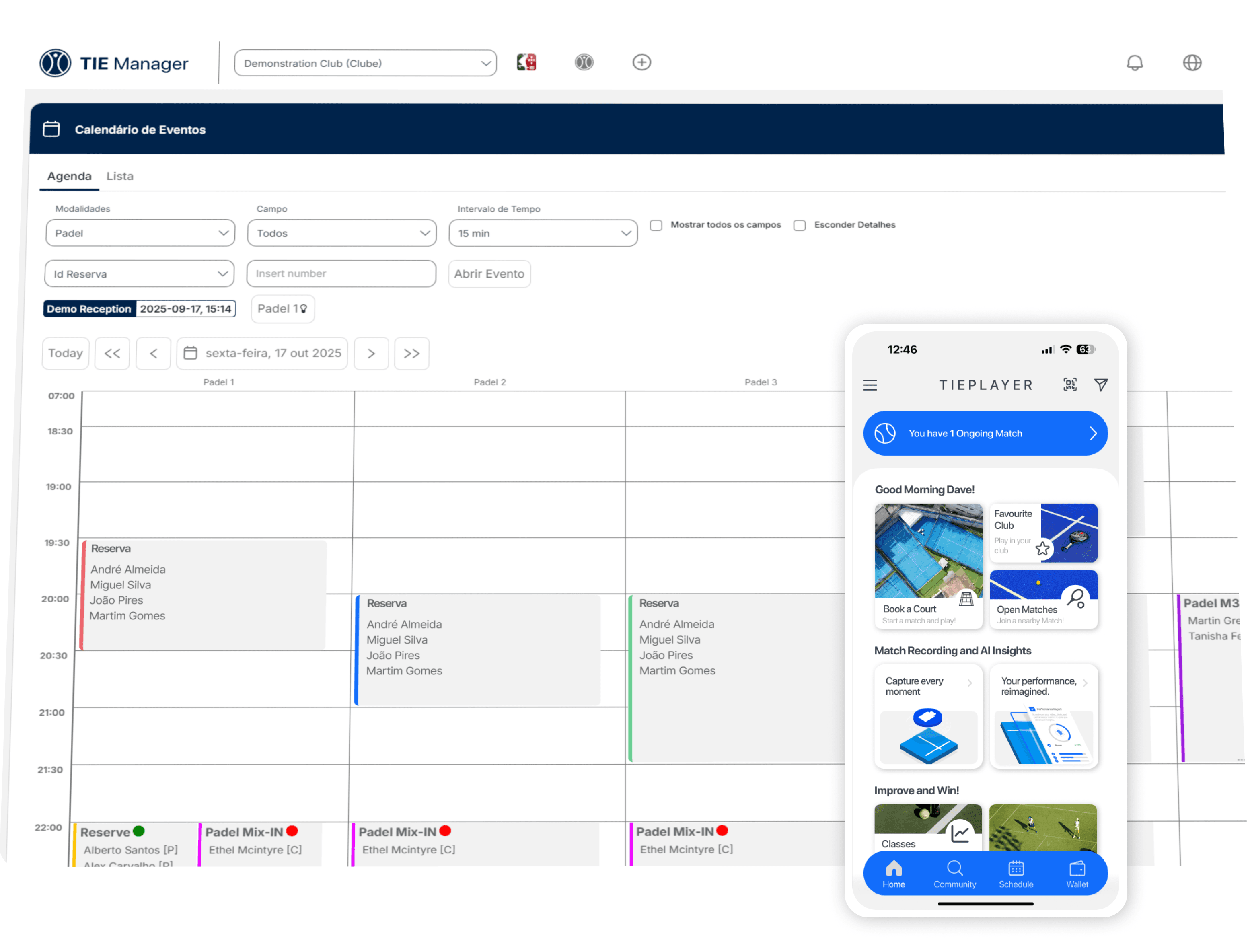
TieManager — Tieplayer’s management dashboard — is a clear example of how to simplify daily chaos with sports-management software designed specifically for racket-sport clubs.
2. Lack of control over payments
Late invoices, unidentified transfers, cash payments that disappear along the way…
Financial management is often done “in someone’s head” — and that costs money. Literally.
Besides affecting the club’s cash flow, this lack of control also weakens relationships with players and coaches.
How to avoid it: automate payments and keep clear records of all transactions with up-to-date reporting.
Less confusion, more profit.
Tools like TieManager link payments to bookings and training sessions, with automatic alerts and accessible history.
3. Not knowing who your most valuable players are
Who plays more often?
Who brings friends?
Who always pays on time?
Without data, every decision is a shot in the dark.
Many clubs operate daily without knowing who truly drives their business.
How to avoid it: use a dashboard with clear metrics on usage patterns, loyalty and behaviour.
The right information helps you take care of the players who matter most.
Clubs that master this data can build far more effective loyalty campaigns.
4. Disorganized communication with staff and coaches
Last-minute cancelled lessons, double bookings, switched schedules — often due to simple internal communication failures.
And the worst part?
Players feel these mistakes, and it undermines their trust in the club.
How to avoid it: provide a shared schedule and a system where each coach can see their week — without relying on scattered messages.
TieCoach, the dedicated coaching app, connects with TieManager and Tieplayer to keep staff and management aligned.
5. No visibility over the operation as a whole
Without consolidated reports, many managers operate in reactive mode.
They put out fires, but can't plan ahead.
They work hard but grow little.
It’s common to hear phrases like “I think we’re full” or “I don't know if this time slot is profitable” — all because of missing real data.
How to avoid it: analyse real data regularly.
Know how many courts are booked, when, by whom and why.
That allows strategic decisions and resource optimization.
Modern sports-management software provides clear, automated dashboards.
6. Believing that technology is only for big clubs
This is one of the most harmful myths.
Many small clubs think digitalization is expensive, complex or “not for them.”
But small clubs often benefit the most.
Every saved hour, every automated task and every avoided mistake has an immediate impact.
How to avoid it: start by automating the simplest processes — bookings, payments and training schedules.
Less paperwork, more time for players.
Digitalization isn’t a luxury — it’s a survival tool.
7. Ignoring that a club is an experience, not just a service
Having good courts is important.
But what creates loyalty is the experience: smooth communication, helpful staff, easy booking, easy payment, easy play.
If it's difficult, players will look elsewhere.
Today, customers expect the same smooth experience from a sports app as they get from transport or food-delivery apps.
Your competition is just one click away.
How to avoid it: put the player at the center.
Simplify the life of anyone who walks into your club.
Digitalization isn’t just an internal process — it’s a way to take care of the customer experience.
Conclusion
Clubs that repeat these mistakes remain stuck in the past.
Those that recognize them — and change — create space to grow.
The good news?
In 2025, intuitive, accessible technology already exists — built specifically to solve these exact pains.
If you manage a club, you don’t need to do everything alone.
There are tools that help you gain time, profit and clarity.
More than managing a club — it’s time to evolve.
Shall we?