Sports Club Management in 2025: Trends

In this article, we highlight the key trends in sports club management that are changing the game — and how you can apply them to your club.
Sports Club Management in 2025: The Trends
Sports club management in 2025 goes far beyond handling bookings and keeping courts occupied.
It’s about leading a community, ensuring smooth experiences, maintaining sustainable operations and adapting to an increasingly digital ecosystem.
In recent years, racket-sport clubs (padel, tennis and pickleball) have gone through accelerated transformation. And in 2025, anyone who wants to grow can no longer rely on notebooks, phone calls and WhatsApp chats.
In this article, we explore the main sports-club management trends that are changing the game — and how you can apply them in your club.
1. Full digitalization of the operation
Online bookings, digital payments, coach management, player communication, supplier coordination and automated reporting.
Today, everything can — and should — be centralized in a single sports-management platform.
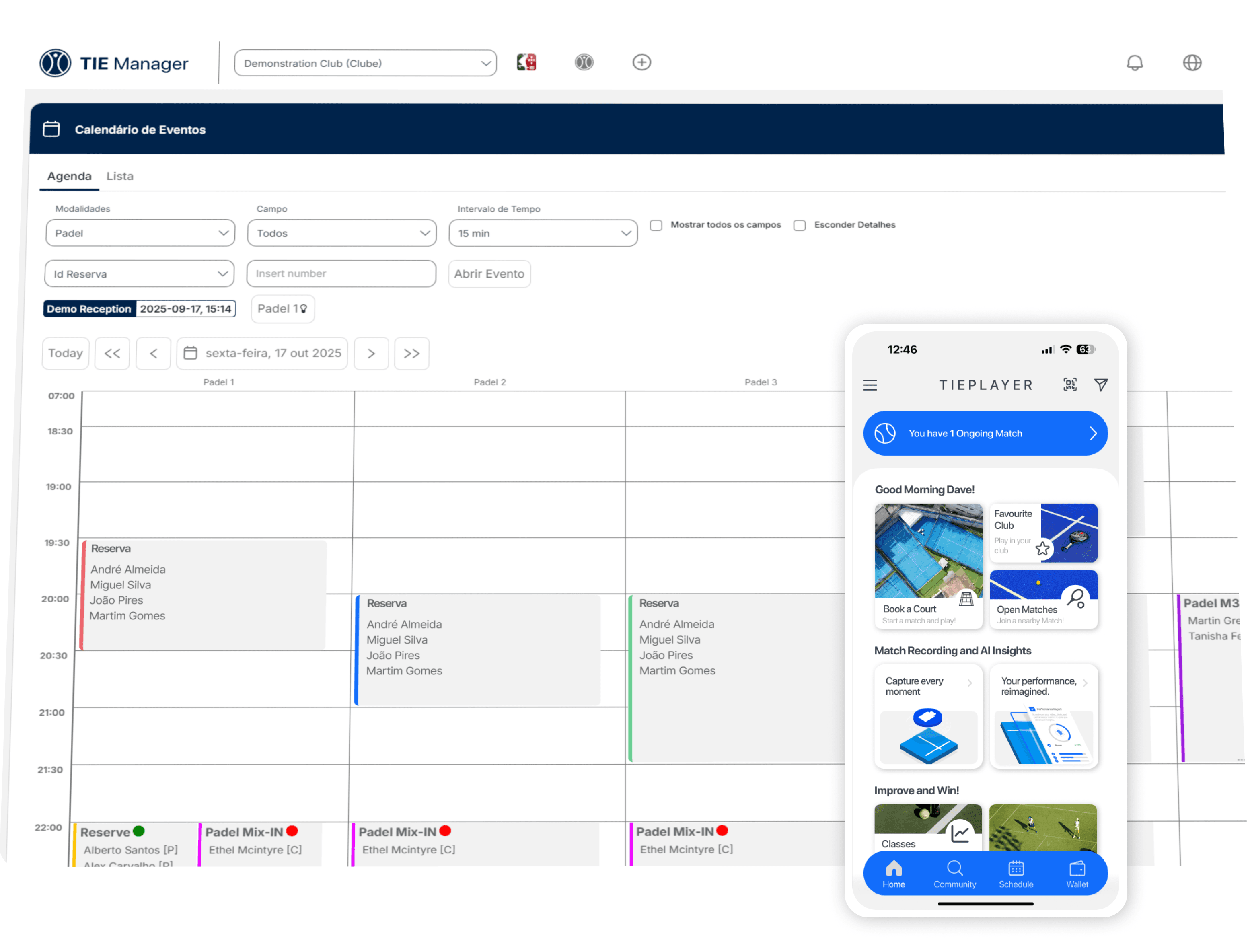
Solutions like Tieplayer are becoming the “central nervous system” of many clubs, eliminating manual tasks and freeing time for what truly matters: helping the organisation grow.
Club digitalization is no longer an option — it is now a competitive advantage.
By integrating every operational touchpoint — from court bookings to financial management — clubs gain a holistic view of their business, can react faster and respond better to the needs of members and players.
2. Automation and efficiency as key pillars in modern sports-club management
Coach schedules, attendance tracking, player reminders and billing can all be interconnected.
This is not just about technology — it’s about operational efficiency and resource optimization.
In 2025, the best-managed clubs are the ones that treat time as a precious resource.
Automating bookings and administrative work means gaining hours back — and offering a more professional experience.
Automation also reduces human error, minimizes forgetfulness and creates standardized workflows that save time and headaches for management teams.
Every task that moves from someone’s head into a system is a step toward a smoother, more organized operation.
3. Customer experience at the center
Having a good court is not enough. Players want to feel welcomed, informed and part of something bigger.
Clubs with integrated apps, active communication channels and personalized experiences will stand out.
Technology is the tool — but human relationships remain the focus.
Happy players play more, recommend more and stay loyal.
Digital club management must start with the user at the center.
Features like reminders, direct in-app communication, group management and tournament organization are now essential for offering a frictionless experience.
A club that offers convenience earns a permanent spot in a player’s weekly routine.
4. Data as a competitive advantage
Clubs that record and analyze their data (bookings, occupancy, usage patterns, financial performance) make decisions that are faster and more accurate.
The era of instinctive management is giving way to the era of metric-driven management.
Dashboards like those in TieManager are becoming strategic tools.
Using data means turning knowledge into action — and into growth.
By understanding which time slots are in highest demand, which training types attract the most players or which profiles are most active, clubs can adjust their offering, improve profitability and even anticipate consumption trends.
5. Sustainability and social responsibility
Clubs are increasingly aware of their environmental impact and their connection to the community.
Social initiatives, energy efficiency, sustainable materials and accessibility are gaining prominence.
Sport can be a driver of change — and clubs have both the responsibility and the opportunity to lead that movement.
Alongside ecological practices, there is also growing emphasis on inclusion — in gender equality, physical accessibility and economic accessibility.
Clubs that promote diversity and responsibility gain reputation, trust and stronger community ties.
Conclusion
Sports club management in 2025 is not just about keeping everything running.
It is an opportunity to evolve, professionalize and transform the experience of everyone who steps into the club.
Digitalizing, automating, listening to players, measuring what matters and creating positive impact — these are the actions that will differentiate the clubs prepared for the future.
Those who adopt these trends won’t just keep up with the future —
they will help build it.