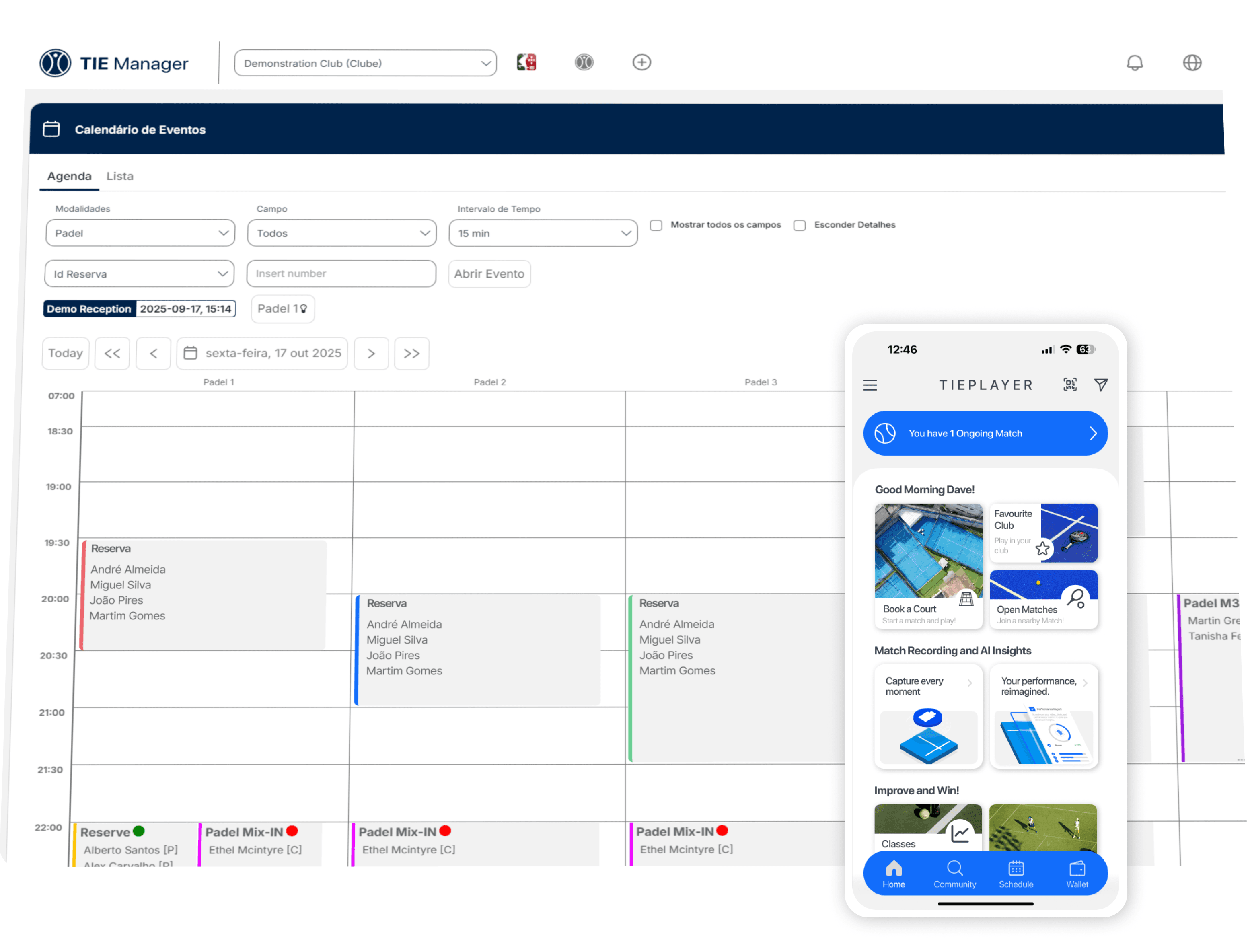
TARS, the algorithm that transformed Padel

Yes, we measure each player's level. And we achieve reliable results.
TARS, the Algorithm Transforming Padel
As part of its forward-thinking mission and central role in the digital evolution of padel, Tiesports has developed the TARS algorithm (Tiesports Advanced Rating System) — a calculation model designed to promote a fair and competitive classification system for all players.
Developed entirely in Portugal, this rating system provides a clear and accurate measure of each athlete’s real ability, placing every player between level 1 (less developed) and level 32 (most developed).
Below, we explain exactly how it works.
How Does This Algorithm Work in Padel?
In every padel match, the algorithm calculates an individual score for each player.
To determine this, multiple factors are analysed, including:
expected probability of victory
performance weighting
competition type
result weighting
partner weighting (in doubles)
Only matches played within the previous 12 months count toward a player’s rating. This ensures the result reflects their current performance level as accurately as possible.
How to Improve Your Rating
A player (or pair) that performs better than the algorithm’s expectation will see their rating rise, while the opponent’s rating may decrease.
This is the core mechanism behind evolution in TARS.
To increase your rating, we recommend the following:
Play well
Strong performance is the most basic way to improve your rating.
It is possible to move up even without winning — as long as you win more games than statistically expected.
Play more
The more matches you feed into the system, the more accurate and favourable your rating becomes.
Play differently
Avoid facing the same opponents repeatedly.
The algorithm is especially precise when it has a wide variety of comparisons across players.
Note:
TARS needs time to converge to the most accurate representation of your real ability.
Register your matches consistently and participate in tournaments through the platform to get the fairest and most realistic rating possible.
Frequently Asked Questions
When are ratings updated?
Three days after each match.
This window ensures that the results are properly recorded:
In tournaments, results are validated by event organisers.
In friendly matches, results must be confirmed by opponents (within 48 hours).
If I beat someone with a much higher rating, will mine increase?
Yes.
The algorithm considers the opponent’s rating and the expected probability of victory.
A low expected win rate means a much larger rating gain when you win.
If I lose to a stronger player, will my rating drop significantly?
No.
A low expected win rate makes the outcome predictable — so the impact is minimal.
Similarly, your opponent will not gain many points for winning a match they were expected to win.
If I beat someone stronger, will I gain even more?
Yes.
A low expected win rate combined with a positive result leads to a substantial rating increase for you and a sharper drop for your opponent.
Does playing with a much stronger partner affect my rating?
If your partner has a significantly higher rating and their impact is clearly decisive in beating an opponent of your level, your rating increase will be lower — because your partner contributed more.
This only applies when there is a large difference between the partners’ ratings.
Does winning 6-0 / 6-0 count the same as any other result?
No.
Result weighting matters.
A dominant win yields a larger rating increase.
Likewise, suffering a heavy loss when you were expected to win results in a sharper drop.
Does confidence or momentum influence expected victory?
Yes.
The system analyses each player’s recent results.
A player on a winning streak is statistically more likely to perform well due to increased confidence — and this is reflected in the algorithm.
Does a friendly match affect my rating just like an official tournament?
No.
Competitive context is one of the major weighting factors.
From highest to lowest impact:
Official federation tournaments
Leagues and events managed by Certified Promoters
Regular Club Events
Friendly matches
Each type has its own coefficient within the algorithm.
What happens to my rating if I stop playing?
Your rating remains active for three months.
During inactivity, a slight natural depreciation may occur due to algorithmic recalibration.
Staying active ensures stability and fairness in your rating.
Can I register friendly matches? Do they count?
Yes and yes — but only if played in certified clubs.
Matches registered without a defined location do not count toward the rating.
Is the rating male, female, or mixed?
TARS is universal and not separated by gender.
However, if groups do not compete across genders, the rating may reflect the performance within that "bubble" rather than the broader universe — meaning cross-group comparisons may be less accurate.
What happens if a group only plays among themselves?
This creates an isolated “bubble”.
When someone in that group finally plays outside it, the results help recalibrate the entire bubble towards the universal scale.
This is why the best way to evolve your rating is to play with as many different opponents as possible.